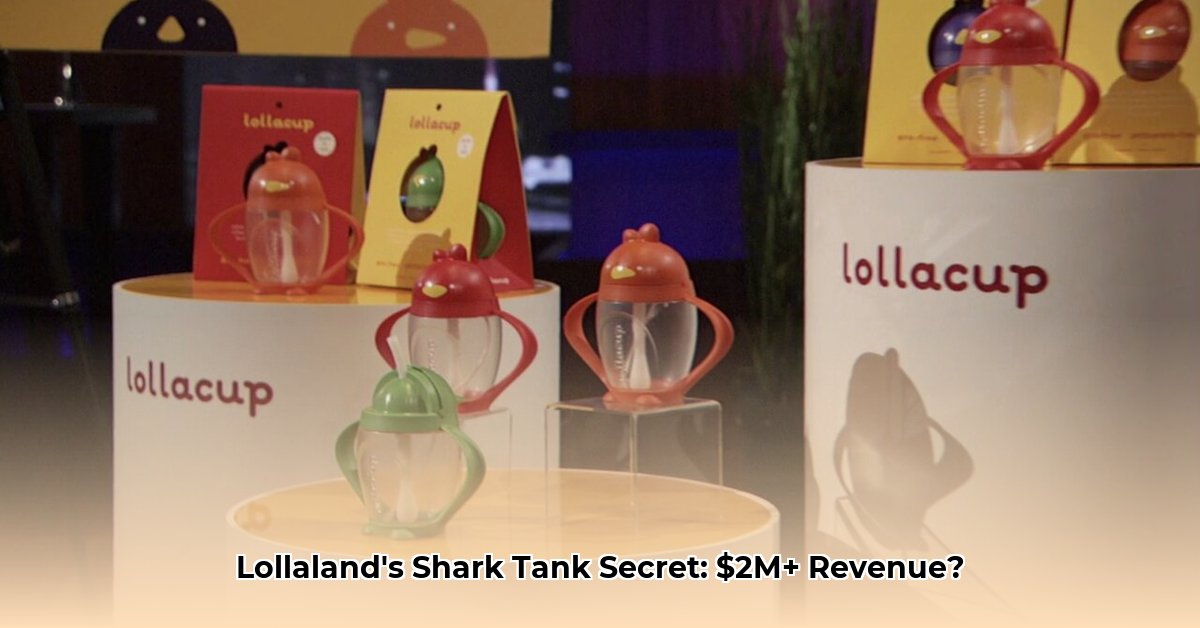
Lollaland's Post-Shark Tank Journey: A Sippy Cup Success Story?
Remember Lollacup, the vibrant kids' cup company that charmed the Sharks on Shark Tank? Their journey since then is a compelling blend of entrepreneurial triumph and strategic challenges, a story of rapid growth, calculated risks, and the ongoing quest for sustainable success in a competitive marketplace. While estimates place their current net worth between $2 million and $2.9 million, with annual revenue in a similar range, the path to those figures wasn't straightforward. Their story offers valuable lessons for any aspiring entrepreneur. For more on Shark Tank success stories, check out this useful resource.
Did you know that initial projections valued Lollacup at $666,667, far exceeding the final $250,000 deal struck on Shark Tank? This discrepancy highlights the inherent volatility in startup valuations. What made the difference? A more realistic assessment of the market and the complexities of manufacturing, perhaps. But their tenacity in the face of these challenges is what defines their narrative.
From Sippy Cups to Strategic Growth: Navigating the Post-Shark Tank Landscape
The immediate post-Shark Tank boost was undeniable. The national TV exposure translated into a significant surge in sales. Their cleverly designed, easy-to-clean, BPA-free cups carved a niche in a crowded market. But Lollaland made a bold, strategic choice: to manufacture their products in the U.S. This commitment to quality, while delivering superior products, also presented a significant challenge. Domestic manufacturing, while preserving quality, entails higher production costs compared to overseas competitors. This decision, a potential double-edged sword, is central to understanding Lollaland's ongoing success and the sustainable potential of their business model. How will this strategic choice continue to impact their bottom line?
Strategic Pivots and Future Plans: A Roadmap to Continued Success
Lollaland's strategic planning for the future is multi-faceted. We can summarize their short-term and long-term goals as follows:
Short-Term Goals (Within the Next Year):
- Targeted Marketing Expansion: Refining marketing strategies to enhance online sales and expand their customer base. This includes developing a more sophisticated targeting approach.
- Leveraging Shark Tank Connections: Utilizing the expertise and network of their investors, Mark Cuban and Robert Herjavec, to optimize business strategies.
- Strengthening Retail Partnerships: Collaborating with retailers to increase product distribution and explore potential co-branding opportunities.
Long-Term Vision (3-5 Year Outlook):
- Product Diversification: Expanding their product line beyond sippy cups to include complementary children's products (lunchboxes, plates, bibs).
- Strategic Collaborations: Exploring partnerships with complementary brands to leverage shared resources and expand market reach.
- Manufacturing Optimization: Re-evaluating their manufacturing strategy to balance U.S. production with cost-effective options, potentially incorporating a hybrid approach.
- Developing an Exit Strategy: Formulating a plan for future investors, potentially including a sale of the company or an IPO.
Risk Mitigation: Addressing Potential Challenges
Lollaland's impressive growth needs to be supported by a proactive approach to risk management. Their success hinges on successfully mitigating potential obstacles. Here’s a snapshot of their challenges and their potential solutions:
| Risk Factor | Likelihood | Impact | Mitigation Strategy |
|---|---|---|---|
| Fierce Competition | High | High | Continuous innovation, strong brand building, targeted marketing |
| Expensive Manufacturing | Medium | Medium | Exploring alternative manufacturing options, perhaps a hybrid model |
| Retail Dependency | Medium | Medium | Diversifying sales channels, building a strong online presence |
| Reputational Damage | Low | High | Prioritizing excellent customer service and rigorous quality control |
| Rapid Growth Challenges | Medium | High | Strategic partnerships, efficient operations, and careful scaling |
"The key to Lollaland's continued success lies in their ability to adapt, innovate, and manage their growth strategically," says Dr. Anya Sharma, Professor of Entrepreneurship at the University of California, Berkeley. "Their commitment to quality is commendable, but efficient scaling and smart risk management are crucial for long-term viability."
The Lollaland story isn't just about sippy cups; it's a case study in navigating the complexities of post-Shark Tank success. Their journey showcases that while initial success provides a strong foundation, continuous adaptation, strategic decision-making, and careful risk management are essential for any business striving for sustainable growth. The next chapter of Lollaland's story promises to be just as engaging.